A thickened or discolored toenail sends most people straight to a search bar for home remedies, and some careful home care genuinely helps around the edges. But it's worth being honest about the limits: home remedies rarely clear an established fungal infection on their own, and knowing where the line is can save months of guessing. Here's a realistic, safety-first rundown.
Start with dry, breathable feet
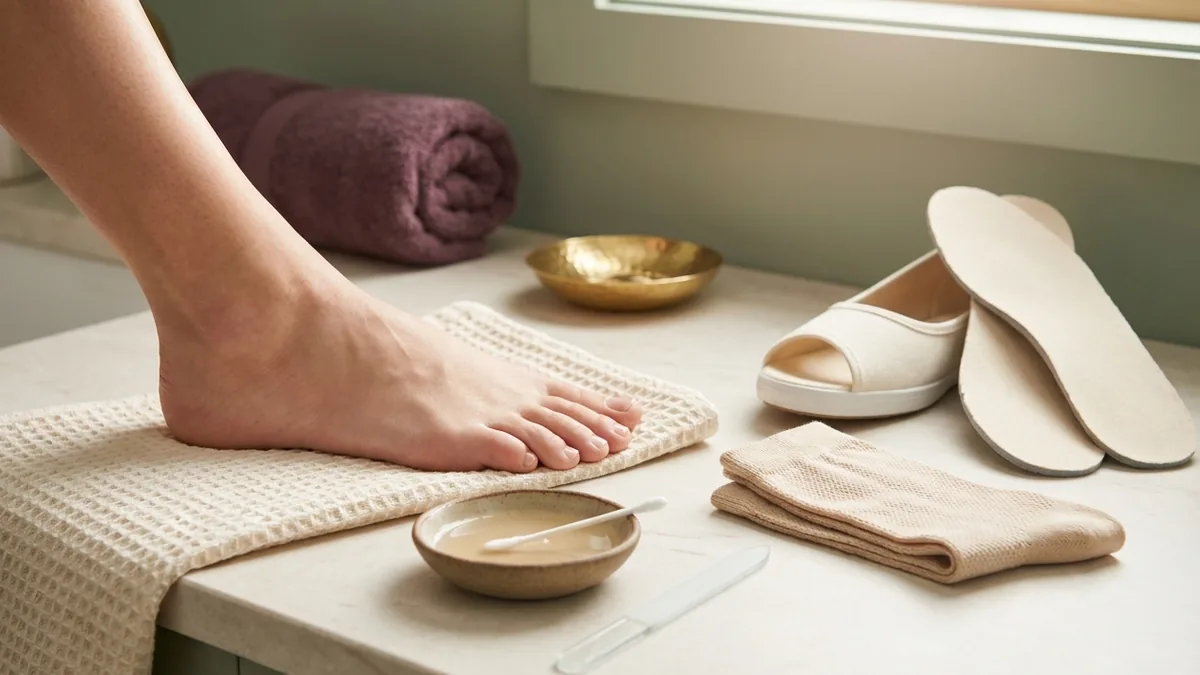
Fungus thrives in warm, damp environments. The single highest-leverage habit is keeping feet genuinely dry — towel-drying carefully between every toe, changing out of sweaty socks quickly, and choosing breathable cotton or moisture-wicking socks over synthetic blends that trap moisture against the nail.
Rotate and dry your shoes, not just your feet
Wearing the same pair of closed shoes every day never gives them time to fully dry inside. Rotate between at least two pairs, pull out removable insoles to air separately, and consider cedar inserts, which absorb moisture and have mild natural antifungal properties.
Tea tree oil: dilute it, and don't expect miracles
Tea tree oil is the most commonly cited home remedy, and it does have some antifungal activity in lab studies. In practice, it should never be applied undiluted — mix a small amount into a carrier oil like jojoba or coconut oil, patch-test on unaffected skin first, and apply sparingly. Treat it as a supportive habit, not a guaranteed fix.
Keep tools separate to avoid spreading it
If one nail looks affected, do not use the same clipper or file on your other nails without disinfecting it first. Keep a dedicated tool for that nail, wash and fully dry metal tools after each use, and store them in a ventilated pouch rather than a closed case.
Don't seal a changing nail under polish
It's tempting to cover a discolored nail with opaque polish, but this makes it much harder to track whether it's improving, staying the same, or spreading — and trapped moisture under polish can work against you. Take a dated photo instead so you have an honest before-and-after record.
Know the signs that mean it's time for a clinician
Not every yellow or thickened nail is fungus, and not every case responds to home care. See a professional if a nail is spreading to other toes, becoming painful, lifting from the nail bed, or simply not improving after a few weeks of consistent dry-and-clean habits. Prescription antifungal treatments exist for a reason — home remedies are a first step, not a substitute for one.
Save this so you have the realistic version on hand before trying another random remedy from a video.
Found this useful? Save it to Pinterest so you can find it again — and follow Nail Glow Lab for a new guide every few days.
Frequently asked questions
Can tea tree oil cure toenail fungus on its own?
Tea tree oil may help with mild surface discoloration for some people, but there is limited evidence it clears an established fungal infection alone, and it should always be diluted in a carrier oil and patch-tested first.
How long should I try home care before seeing a doctor?
If a nail is not visibly improving after 2 to 4 weeks of consistent dry-and-clean home care, or if it is spreading, thickening, or becoming painful, it is time for a professional opinion rather than continuing to experiment.
Is it safe to paint over a nail with suspected fungus?
Covering it with opaque polish makes changes harder to monitor and can trap moisture. It is better to take a dated reference photo and leave the nail visible until you know what you are dealing with.
Can I share nail clippers if one toenail looks affected?
No. Keep a separate clipper or file for the affected nail, disinfect metal tools after each use, and let them dry fully before storing to avoid spreading it to healthy nails.