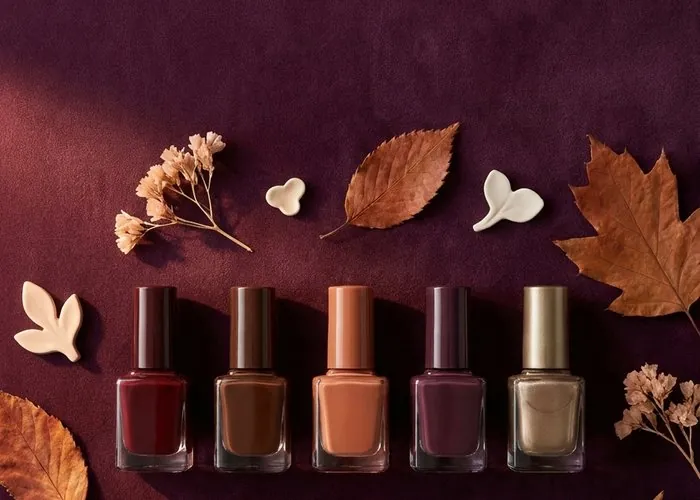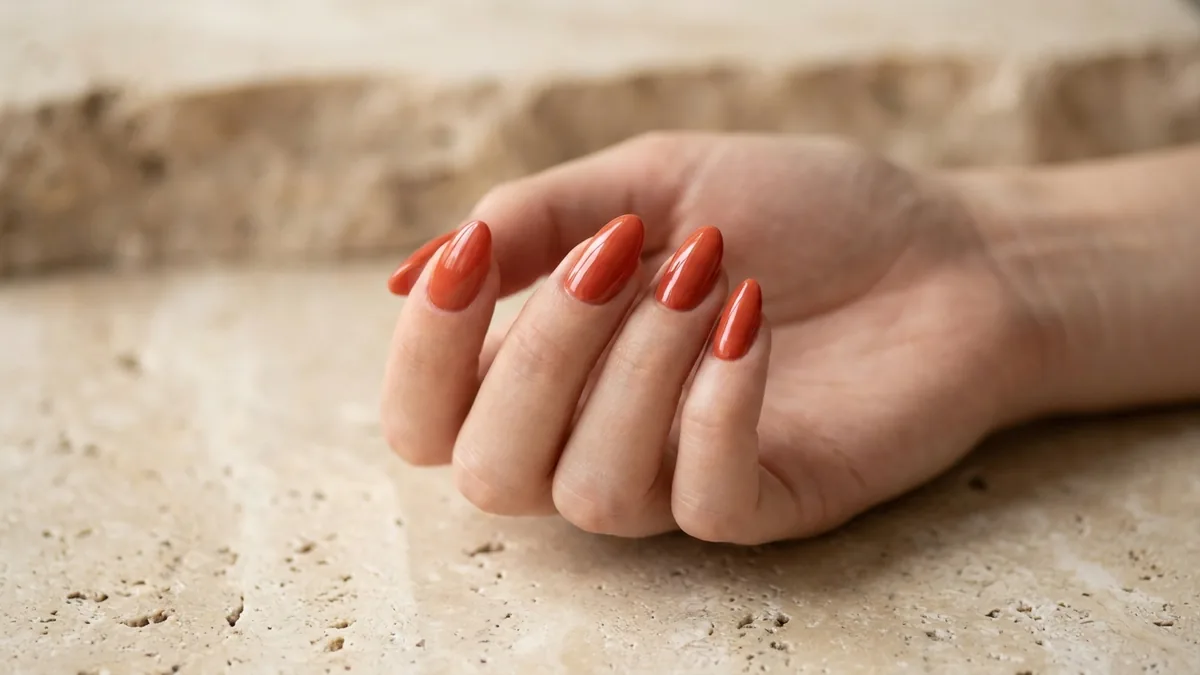
Persimmon — a deep, warm orange-red named after the fruit — landed on Pinterest's color palette list for the year, and it is proving to be one of the most flattering "bold" colors for the colder months, sitting between classic red and autumn orange.
Why persimmon reads as "warm" rather than "Halloween orange"
The difference comes down to depth: persimmon leans darker and more muted than a bright pumpkin orange, closer to a burnt terracotta-red. That extra depth is what makes it feel sophisticated rather than seasonal-costume.
Who this color flatters
Because it sits between red and orange, persimmon tends to look warm and healthy against most skin tones, particularly medium and deep skin tones where it reads rich rather than washed out. Fair, cool-undertone skin can balance it with a slightly more red-leaning version of the shade.
Nail shapes and finishes that suit it
A glossy finish makes persimmon look juicy and rich; matte versions can read slightly more muted and "dusty," which works well for an understated fall manicure. Almond and squoval shapes both suit the color equally — this is a color-driven trend rather than a shape-driven one.
Pairing persimmon through winter
Persimmon pairs naturally with deep green, cream, and gold accents for a cohesive cold-weather palette — useful if you want to coordinate a manicure with a single accent nail in a complementary shade rather than a full pattern.
Found this useful? Save it to Pinterest so you can find it again — and follow Nail Glow Lab for a new guide every few days.
Frequently asked questions
Is persimmon the same as burnt orange?
They are close but not identical — persimmon usually has slightly more red in it than a classic burnt orange, giving it a warmer, richer look.
Does this color stain natural nails?
Any deep, pigmented polish can leave temporary staining if applied without a base coat. Always apply a clear base coat first, and the pigment will wipe off without residue.
Can I wear persimmon into spring?
It works especially well through late fall and winter; by spring, lighter or cooler-toned reds tend to feel more seasonally appropriate, though there is no strict rule.